Industry Insight
Factory vs. Trading Company: A Buyer’s Guide to Sourcing Stone Coated Steel Roofing
Factories and trading companies each offer distinct advantages. Learn how to verify a supplier, protect your margins, and choose the sourcing model that fits your roofing business.
By HoMate Global Operations
If you are looking to import stone coated metal roofing tiles, finding the right supplier is the most critical step. During your search on platforms like Alibaba, Made-in-China, or Google, you will come across hundreds of suppliers. Almost all of them will tell you: "We are a professional manufacturer!"
But here is the reality: a huge percentage of them are actually trading companies (middlemen).
While both factories and trading companies have their place in the supply chain, choosing the wrong partner can hurt your profit margins or lead to quality issues. There is no "one-size-fits-all" answer: many experienced buyers swear by direct factories, whereas others find that trading companies save them more hassle. In this article, we will weigh the pros and cons of both approaches and help you identify them, helping you find the business model that works best for you.
1. Working Directly with a Factory
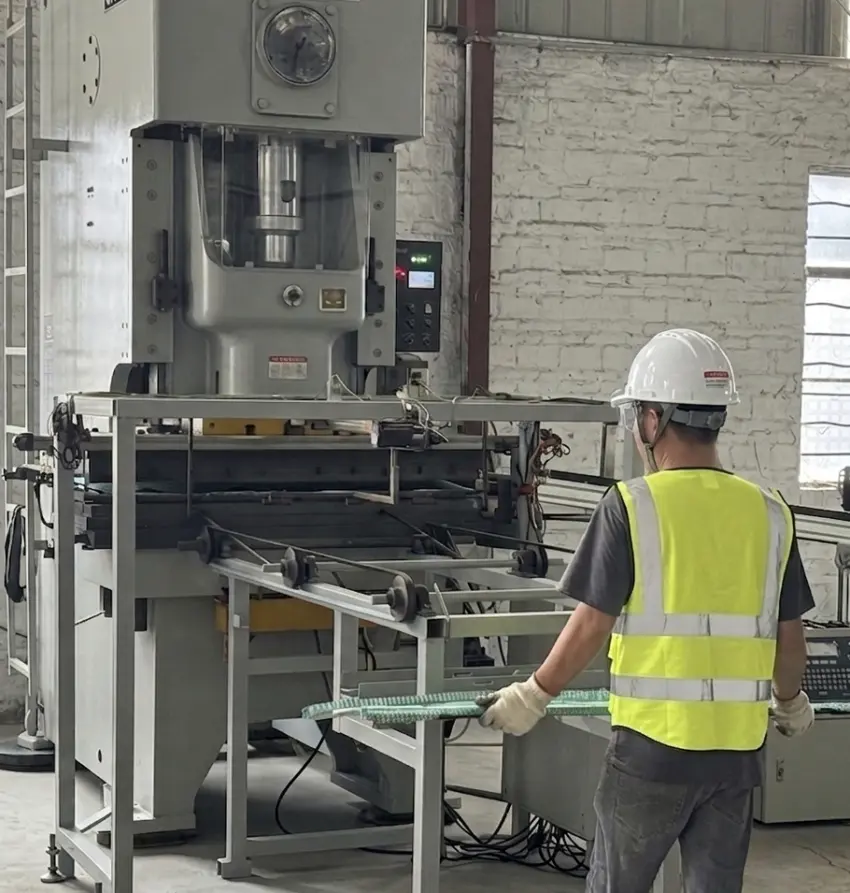
A genuine manufacturer actually owns the production lines, pressing machines, and coating equipment. They buy raw steel coils and stone granules to manufacture the roofing sheets from scratch.
The Pros
No Middleman Markup: By cutting out the trading company's commission, you secure the lowest direct price to maximize your profit margins.
OEM & Exclusive Development: Factories can easily print your brand logo on the back of the tiles. Even better, you have the opportunity to co-develop exclusive profiles or custom colors for your local market.
Deep Technical Knowledge: Factory engineers know their machinery and formulas inside out. They will give you an honest, highly accurate answer on whether they can meet your specific technical requirements (like wind resistance or custom coating weights)—avoiding the common headache where a supplier promises everything but fails to deliver.
The Cons
Limited Product Selection: Factories specialize strictly in what they make. You cannot buy unrelated building materials (like waterproof membranes, insulation, or tools) from them.
No One-Stop Sourcing: If your project requires multiple types of building products, you will have to manage and coordinate with several different suppliers yourself.
2. Working with a Trading Company
A trading company does not own the manufacturing plant. Instead, they partner with multiple local factories to source products and sell them to overseas markets.
The Pros
Supplier Comparison Across Regions: Different manufacturing hubs in China have different supply chain strengths, resulting in variations in price and quality for the same stone coated roofing tile. A trading company can leverage their network to compare products across different regions and find the one that best fits your specific budget or market standard.
Broader Product Range: They are not limited by their own machinery. They can offer you a massive catalog of various building materials and different roofing styles from multiple producers.
More Flexible MOQs: Trading companies often have stock or deal with multiple factories, making them more willing to accept smaller or mixed-product orders.
The Cons
Hidden Markups: You will pay a higher unit price because the trading company adds their commission or profit margin to the factory’s base price.
Communication Delays & Risks: Traders are middlemen. If you have a complex technical question or a quality issue, they cannot give you an immediate answer. They must consult the factory first. In worst-case scenarios, some eager traders might promise to meet your high technical standards just to close the deal, even if the factory cannot actually achieve it.
The Truth: Why Middlemen Pretend to Own the Factory
It is an open secret in the building materials industry that almost every trading company calls themselves a manufacturer. Here is why they do it:
Buyers Prefer the Source: Most importers believe that buying from a factory means getting the absolute lowest price and best quality control. Trading companies know this buyer preference, so they change their label to fit what you want to hear.
Avoiding Heavy Price Negotiation: When a supplier says "We are the factory," it sounds final. It implies there is no middleman commission to cut. This helps them maintain higher prices during negotiations.
Keeping the Factory Secret: They worry that if you find out they don't own the machinery, you will go out into the market to find the real workshop yourself, leaving them with nothing.
3. How to Spot the Difference: Practical Steps
If a supplier claims to be a direct manufacturer of stone coated metal roofing, you don't have to just take their word for it. Here are three effective ways to verify their true identity:
Verify the Registered Address: Stone coated steel roofing production requires massive stamping presses, sand-coating lines, and heavy steel coils. Because of this, a real factory's registered address will always be in an Industrial Zone or suburban manufacturing park. If their registered address points to a high-rise office building in the center of a commercial city, they are a trading company.
Watch How Fast They Answer Tech Questions: When you ask complex questions about things like the zinc-aluminum coating weight or custom resin formulas, watch their response time. Factory sales reps know their machines and products inside out, so they answer immediately. Trading companies don't run the production lines, so they will delay their answers or give you generic, unhelpful replies while they try to ask the real manufacturer behind your back.
Request a Live Video Call from the Production Line: Do not rely on pre-recorded videos or corporate photos. Ask for a quick, unannounced video call via WeChat or WhatsApp to see their pressing machines and stone-coating line in real-time. A genuine manufacturer will gladly show you their workshop, while a middleman will usually make excuses to avoid it.
Which Sourcing Path Should You Choose? (3 Examples)
Scenario A: High Volume + Custom Branding = Choose a Factory: If you buy multiple containers monthly, need your own brand printed on the roofing tiles, and require strict quality control, you need a real factory to maximize your profits and keep quality stable.
Scenario B: Diverse Sourcing + Container Consolidation = Choose a Trading Company: If you need to buy various building products across China—like roofing tiles, gutters, tiles, and windows—and want to save time by dealing with one single contact who can consolidate everything into one shipment, a trading company is ideal.
Scenario C: Testing Markets + Comparing Regions = Choose a Trading Company: If you are unsure whether tiles from northern or southern Chinese supply chains fit your market, a trading company can easily source, compare, and ship samples from different production hubs for you.
Summary
In the end, there is no single best supplier—there is only the supplier that fits your business strategy. For one-stop building material mixing, a trading company is a valuable asset. But for deep brand customization, cost savings, and bulletproof technical reliability, going straight to the machinery source is unbeatable.
As a dedicated stone coated metal roofing manufacturer, we believe in complete transparency about our production limits and pricing. If you want to see how we can lower your sourcing costs and guarantee product consistency, reach out to our team now for a free consultation and sample pack.